Valerian vs passionflower for calm: what AudiVax pairs, and why
Valerian vs passionflower comes down to a difference of temperament: valerian is the deeper, evening-leaning nervine traditionally tied to restful downtime, while passionflower is the gentler, daytime-friendly herb used to ease everyday nervous tension. They overlap in the calm they encourage but arrive there by different routes — which is why AudiVax uses both rather than one.
Valerian or passionflower — the honest comparison, in one place.
- The short version
- Neither herb is objectively "stronger". Valerian leans sedating and evening; passionflower leans light and daytime. AudiVax pairs them to cover both.
- Pick valerian if
- Your goal is a settled wind-down and restful evening routine.
- Pick passionflower if
- You want gentle daytime ease without a heavy, sleepy feel.
- Why not both
- They are traditionally combined; together they give a broader, softer calm than either alone at a higher dose.
- Honest limits
- These are calming botanicals, not a treatment for hearing loss, tinnitus, anxiety or insomnia. Results vary.
Both herbs appear on nearly every serious calming label, and AudiVax is no exception: they are its two headline nervines. This guide lays out how they differ, where they overlap, and the logic behind pairing them.
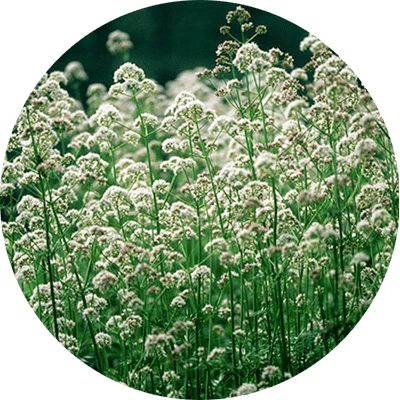
What is the difference between valerian and passionflower?
The core difference is depth and timing: valerian is a stronger, more sedating nervine best known for supporting restful evenings, whereas passionflower is a lighter, calmer-of-the-mind herb used through the day to ease ordinary nervous tension. Both belong to the family herbalists call nervines — plants traditionally used to soothe the nervous system — but they are not interchangeable. Think of valerian as the herb you reach for when you want to slow down and settle, and passionflower as the one that takes the edge off a busy, buzzing head without pulling you toward sleep. Both belong to the nervine family rather than the adaptogen family, a split we explain in adaptogens vs nervine herbs for ears.
That matters because "calm" is not one feeling: some people need help letting go at night, others to feel less wound-up at 3 p.m. A thoughtful formula treats those as different jobs — the first clue to why AudiVax carries both.
What is valerian, and what does it do for calm?
Valerian (Valeriana officinalis) is a flowering plant whose root has been used since antiquity as a relaxing, sleep-friendly herb. Its calming reputation is usually linked to compounds that interact with GABA, the brain's main "slow-down" signaling system, though researchers note the exact mechanism is still not fully mapped. In practice, valerian is the more noticeably sedating of the two — the reason it headlines so many evening and wind-down blends.
The evidence is mixed but not empty. Reviews from the National Center for Complementary and Integrative Health call valerian possibly modestly helpful for sleep quality in some people, while cautioning that studies are small and inconsistent. Honestly stated: it is a traditional aid to restful downtime, not a proven sleep medicine, and not a treatment for insomnia or any medical condition.
What is passionflower, and how does it compare?
Passionflower (Passiflora incarnata) is a climbing vine traditionally used to quiet everyday nervous tension and restlessness. Compared with valerian it is the gentler partner — less overtly sedating, easier to take during daylight hours, and often described as taking the "hum" out of an over-busy mind. Like valerian, its calming action is generally attributed to effects on GABA signaling, and like valerian, the human research is limited and preliminary.
Where valerian leans toward the bedroom, passionflower leans toward the desk and commute. Small studies of it for pre-procedure nervousness and general tension are cautiously positive but far from conclusive. It is best understood as a light, daytime-friendly calming herb rather than a sleep aid — not a treatment for anxiety or any diagnosed condition.
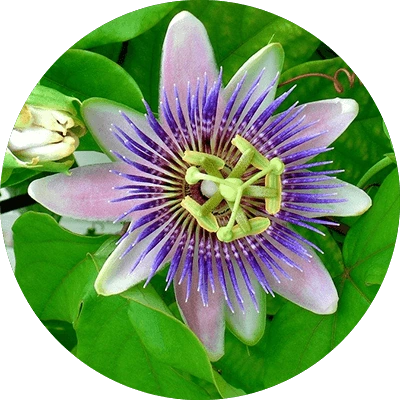
Valerian vs passionflower: a side-by-side comparison
A side-by-side comparison makes the two herbs' complementary roles obvious: they share a calming goal but differ in strength, timing and typical use. The table below summarizes how they line up in traditional practice — describing general and traditional roles, not medical claims.
| Feature | Valerian | Passionflower |
|---|---|---|
| Botanical | Valeriana officinalis (root) | Passiflora incarnata (aerial parts) |
| Calm profile | Deeper, more sedating | Lighter, gentler |
| Best time of day | Evening / wind-down | Daytime-friendly |
| Traditional focus | Restful downtime, sleep quality | Everyday nervous tension |
| Proposed action | GABA-related relaxation | GABA-related relaxation |
| Typical "feel" | Settled, sleepy | Calm, still alert |
| Evidence strength | Limited, mixed | Limited, preliminary |
See the exact dose of each in AudiVax →
Valerian or passionflower — which should you choose?
Choosing between valerian and passionflower is really a question about when you need calm, not which herb is "better". Here is how the decision usually shakes out.
When does valerian make more sense?
Reach for valerian when your main goal is a proper wind-down: a settled evening, an easier transition to sleep, or simply slowing a racing mind at night. Because it is the more sedating of the two, most people take it in the evening and avoid it before driving. If restful downtime is the thing you feel you are missing, valerian is the natural starting point.
When does passionflower fit better?
Choose passionflower when you want to feel less keyed-up during the day without getting drowsy — the low-grade tension of a demanding afternoon, say. Its gentleness is the point: it aims to take the edge off while leaving you clear-headed. For daytime calm that does not tip into sleepiness, it is the more comfortable option.
What if you are not sure?
If you cannot decide, you are exactly the person for whom combined formulas exist. Rather than gambling on one herb, a blend lets valerian and passionflower each cover the part of the day it suits best — which is the design idea behind AudiVax and behind most classic calming-herb pairings.
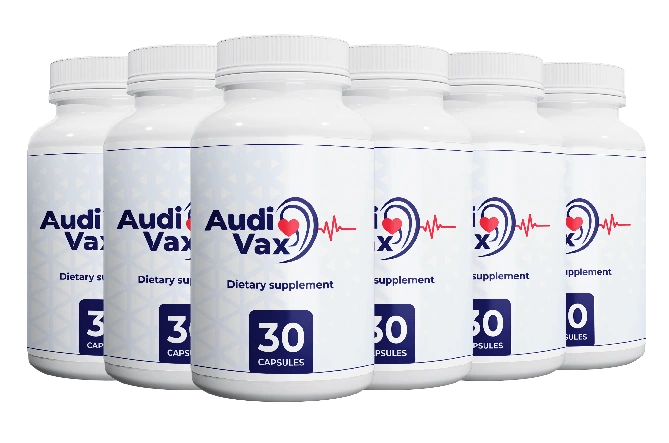
Both herbs, one daily capsule
AudiVax pairs calming valerian and passionflower with hawthorn and adaptogens in a once-daily capsule. The six-bottle bundle is the best value at $49 per bottle, with free U.S. shipping and a 60-day guarantee.
Check today's AudiVax pricing — from $49/bottleWhy does AudiVax combine both calming herbs?
AudiVax uses valerian and passionflower together because their strengths are complementary, not redundant: valerian anchors the evening, passionflower smooths the day, and the pair delivers a broader, gentler calm than either could alone at a higher single dose. This "small amounts of several nervines" approach is standard in traditional herbalism, where blends aim for a balanced effect rather than a heavy hit from one plant.
Pairing also lets each herb work at a restrained amount, leaning on passionflower's lightness rather than pushing valerian hard enough to feel groggy. In AudiVax the two sit alongside chamomile and skullcap for calm, circulatory hawthorn, and the adaptogens rhodiola and ashwagandha — see our guide to calming herbs for ear comfort or the full ingredients breakdown.
One honest caveat: pairing calming herbs is a formulation philosophy, not proof of a stronger result. The human evidence for these combinations remains limited, and AudiVax is a wellness supplement — not a remedy for hearing loss, tinnitus, anxiety or sleep disorders.
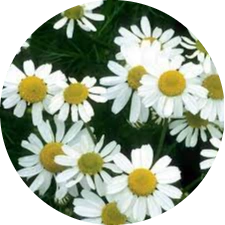
How do you take valerian and passionflower safely?
Taking these herbs safely is mostly common sense: start at the labeled dose, keep the timing consistent, and respect that both lean relaxing. The at-a-glance guide below covers the practical points — general information, not a prescription.
| Question | Practical guidance |
|---|---|
| How much? | Follow the product label. In AudiVax, both herbs are pre-dosed in one daily capsule — no measuring. |
| When? | Evening suits valerian's sedating lean; a set daily time keeps the routine consistent. |
| With food? | Either works; some prefer with a light snack to settle the stomach. |
| What to avoid | Alcohol and other sedatives; driving until you know how you respond. |
| Who should check first | Anyone pregnant, nursing, on medication, or with a health condition — ask a professional. |
| How long to try | Botanicals build gradually; most people give it several weeks. Results vary. |
Both herbs are generally well tolerated at typical doses and carry centuries of traditional use. The most common report is mild drowsiness — useful at night, less so at the wheel. Long-term safety data is limited for each, another reason to stick to labeled amounts and loop in a pharmacist if you take prescription drugs. Neither is a treatment for a medical condition; they remain calming botanicals, best used as one small part of a broader routine that also includes noise protection and healthy circulation, as covered in our guide to supporting healthy hearing naturally.
Frequently asked questions
Is valerian or passionflower stronger for calm?
Neither is objectively stronger; they work differently. Valerian is the more sedating, evening-leaning herb traditionally tied to restful downtime, while passionflower is the gentler, daytime-friendly herb tied to easing everyday nervous tension. AudiVax uses both so the blend covers day and evening calm rather than betting on one.
Can you take valerian and passionflower together?
They are commonly combined in traditional calming blends and are the two headline nervines in AudiVax. Because both lean relaxing, start at the labeled dose, avoid mixing with alcohol or sedatives, and speak with a pharmacist if you take prescription medication.
Which is better for sleep, valerian or passionflower?
Valerian is the herb more traditionally associated with restful, evening downtime, which is why calming formulas often place it first for a wind-down routine. Passionflower is used more for easing daytime nervous tension. Neither is a treatment for insomnia, and results vary.
Do valerian and passionflower help hearing or tinnitus?
No. Neither herb treats, cures or prevents hearing loss or tinnitus, and AudiVax makes no such claim. They are calming botanicals used to support a settled, well-rested state, which is one part of everyday ear-wellness habits alongside noise protection and circulation.
Why does AudiVax use both instead of just one?
Because the two herbs cover complementary parts of the day. Pairing valerian's evening-leaning calm with passionflower's daytime-friendly ease gives a broader, gentler calm profile than a single herb at a higher dose, which is a common rationale in traditional nervine blends.
Are valerian and passionflower safe?
Both have long traditional use and are generally well tolerated at typical doses, though some people notice drowsiness, and data on long-term use is limited. Avoid combining them with alcohol or sedatives, do not use before driving until you know how you respond, and consult a professional if pregnant, nursing or on medication.
See the exact dose in AudiVax — try it risk-free for 60 days →
AudiVax is a dietary supplement, not a treatment for any medical condition, including hearing loss, tinnitus, anxiety or insomnia. These statements have not been evaluated by the Food and Drug Administration. This product is not intended to diagnose, treat, cure or prevent any disease. Always consult a qualified healthcare professional about your individual needs.
References & further reading
- National Center for Complementary and Integrative Health (NCCIH). Valerian. nccih.nih.gov/health/valerian
- National Center for Biotechnology Information (NCBI) Bookshelf. Valerian — LiverTox / drug and supplement monograph. ncbi.nlm.nih.gov/books/NBK548255
- Velasquez A.C.A. et al. Effects of Passiflora incarnata and Valeriana officinalis in the control of anxiety due to tooth extraction: a randomized controlled clinical trial. Oral and Maxillofacial Surgery, 2024.
- Examine.com. Valerian (Valeriana officinalis). examine.com/supplements/valerian
- Examine.com. Passionflower (Passiflora incarnata). examine.com/supplements/passionflower
- Mayo Clinic. Valerian: A safe and effective herbal sleep aid? mayoclinic.org/diseases-conditions/insomnia/valerian
These references describe the ingredients in general terms and do not constitute evidence that any product treats, cures or prevents any condition.
Keep reading: calming herbs for ear comfort · how to support healthy hearing naturally · the best foods for ear health · back to the AudiVax blog · homepage.