Rhodiola rosea benefits: the AudiVax adaptogen for everyday stress
Rhodiola rosea is a cold-climate adaptogen whose main benefit is helping the body meet everyday stress while supporting steadier mental and physical energy. It is prized not for a sudden lift but for a calmer, more sustainable kind of stamina — and in AudiVax it plays a supporting role alongside calming herbs and circulatory hawthorn, as part of a daily wellness routine rather than a treatment for any condition.
What rhodiola rosea actually does, in one place.
- What it is
- A hardy Arctic root (also called golden root or Arctic root) used for centuries in Scandinavia and Russia as an adaptogen for stress and fatigue.
- Best-supported benefit
- Easing stress-related tiredness and supporting steady energy — the area with the most human research behind it.
- How it feels
- Calmer and steadier than caffeine, without the jitter-then-crash pattern of a stimulant.
- Where it fits
- One botanical in the AudiVax blend, taken once daily as part of a broader sleep, movement and stress routine.
Below we unpack what rhodiola is, the benefits the research supports, where the evidence is still thin, and how the root earns its place in a formula like AudiVax. Everything here describes general and traditional use; nothing on this page claims that rhodiola or AudiVax treats, cures or prevents any disease.

What are the main rhodiola rosea benefits?
The main rhodiola rosea benefits cluster around stress and energy: helping the body adapt to everyday demands, easing the fatigue that stress can bring, and supporting steadier mental focus through a long day. Unlike a stimulant, rhodiola is used to help the system find its own balance rather than force it into overdrive — which is why people reach for it during busy stretches, to stay level rather than wired. Its reputation is built on resilience, not a rush.
It is worth being precise about the evidence. Rhodiola’s clearest research signal is on stress-related and mental fatigue; its effects on mood, exercise performance and cognition are studied but more mixed, and it is not a proven remedy for any medical condition. Genuine promise on stress and fatigue, honest uncertainty elsewhere — that is the fair way to read this root.
What is rhodiola, and why is it called an adaptogen?
Rhodiola rosea is a flowering plant that grows in the cold, high-altitude regions of Europe, Asia and North America, and its root has been used in traditional medicine for centuries. The word adaptogen describes a small group of botanicals thought to help the body “adapt” to physical, chemical and emotional stress by nudging it back toward balance rather than pushing it in one direction. By the classic definition an adaptogen should be broadly safe, help the body resist a wide range of stressors, and have a normalising, non-specific effect. That definition is easiest to grasp against its opposite number, which we set out in adaptogens vs nervine herbs for ears.
Rhodiola’s activity is usually attributed to two families of compounds — rosavins and salidroside — which is why quality extracts are standardised to a set percentage of each. Those are the markers researchers track, because a root is only as useful as the active compounds it reliably delivers.
| Rhodiola benefit | What people use it for | Strength of evidence |
|---|---|---|
| Stress resilience | Meeting everyday demands more evenly | Moderate — the best-studied use |
| Reduced fatigue | Easing stress- and burnout-related tiredness | Moderate |
| Steady energy & focus | Sustained mental stamina without a crash | Emerging to moderate |
| Mood support | A calmer, more settled everyday state | Early / mixed |
| Exercise capacity | Perceived effort during activity | Mixed / inconclusive |
“Moderate” is a realistic ceiling for a botanical, and “mixed” means the jury is still out.
How does rhodiola help the body handle stress?
Rhodiola is thought to help the body handle stress by supporting the systems that regulate the stress response, rather than by sedating or stimulating you. Researchers have looked at its interaction with the hypothalamic-pituitary-adrenal (HPA) axis — the network that governs cortisol and the body’s stress rhythm — and at signalling molecules involved in alertness and mood. The practical translation: instead of overriding your stress response, rhodiola is used to help it stay proportionate, so a demanding day feels a little more manageable.
For anyone reading this on a hearing-wellness site, the link is indirect but real. Chronic stress and poor sleep keep the nervous system on higher alert, and many people find everyday ear comfort tracks with how calm and rested they feel — the same logic behind pairing rhodiola with the calming botanicals in AudiVax. You can read more in our guide to calming herbs for ear comfort.

Can rhodiola support steady energy without the crash?
Steady energy is arguably rhodiola’s signature benefit: it is valued for a calm, sustained kind of stamina rather than the spike-and-slump you get from caffeine or sugar. Because it works with the body’s stress and energy regulation rather than flooding it with a stimulant, people often describe the effect as “the fog lifting” rather than “being buzzed” — which matters if you want to feel switched-on in the afternoon without a jittery evening or broken sleep. This is also why timing tends to favour the morning or early afternoon, though sensitivities vary and the label and your own experience are the best guides.
See the exact dose in AudiVax
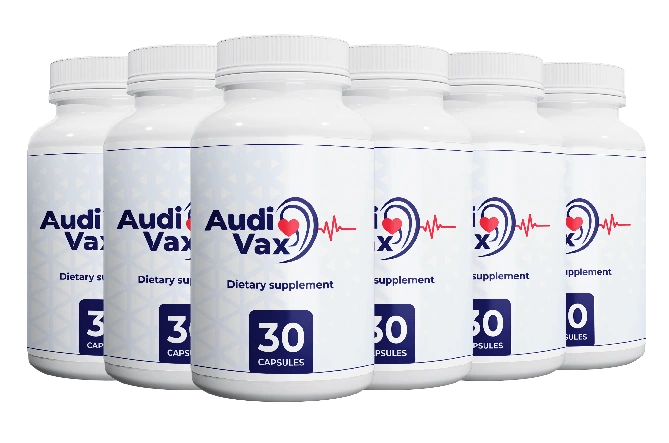
AudiVax pairs rhodiola with calming valerian, passionflower and skullcap, hawthorn and ashwagandha in one daily capsule. The six-bottle bundle is the best value at $49 per bottle, with free U.S. shipping and a 60-day guarantee.
Order AudiVax — from $49/bottleHow does rhodiola compare with other adaptogens?
Rhodiola is best understood as the “steady energy” adaptogen, distinct from calming adaptogens like ashwagandha. Adaptogens are not interchangeable, which is why a formula often combines a few rather than relying on one. The table below sets rhodiola beside familiar companions.
| Botanical | Type | Most associated with |
|---|---|---|
| Rhodiola | Adaptogen | Stress resilience and steady, calm energy |
| Ashwagandha | Adaptogen | A calm, settled response to daily stress |
| Valerian | Nervine | Relaxation and restful downtime |
| Hawthorn | Circulatory herb | Supporting healthy circulation |
| Passionflower | Calming vine | A settled, unwound state |
Notice the complementary pairing: rhodiola brings alert, steady energy while ashwagandha leans calming, so together they cover both ends of the everyday-stress spectrum. That balance — not any single ingredient — is the idea behind a blend.

How does rhodiola fit into the AudiVax blend?
Within AudiVax, rhodiola is the adaptogen that supplies steady, resilient energy while the rest of the formula handles calm and circulation. AudiVax is a once-daily capsule that brings together calming valerian, passionflower, chamomile and skullcap, circulatory hawthorn, and the adaptogens rhodiola and ashwagandha. Stress, sleep and circulation are all part of the everyday environment your ears live inside, so the blend supports that whole picture rather than chasing a single lever. On the calming side of that blend sits skullcap, and skullcap herb benefits for ear comfort explains what it contributes.
Rhodiola’s job in that mix is to keep the “calm” from tipping into “flat” — paired with genuinely relaxing herbs, an adaptogen that supports steady energy keeps the formula balancing rather than sedating. For the full picture, see the ingredients section or our overview of how to support healthy hearing naturally.
Check today’s AudiVax pricing →
How much rhodiola should you take, and is it safe?
For most healthy adults rhodiola is well tolerated at the amounts found in supplements, but the details are worth knowing.
What is a typical amount?
Research has often used standardised extracts in the range of a few hundred milligrams per day, standardised to rosavins and salidroside. In a blend like AudiVax, rhodiola is one of several botanicals in a measured daily capsule, so the number to trust is the one on the Supplement Facts panel rather than a generic figure — the label is always the authority.
Is rhodiola safe, and who should be cautious?
Rhodiola has a good general tolerability record, with side effects — when they occur — usually mild, such as feeling over-energised, restless or, occasionally, a dry mouth. Because it can be mildly stimulating, some people avoid taking it late in the day. It is not for everyone: if you are pregnant or breastfeeding, have bipolar disorder, or take antidepressants, blood-pressure medication or other prescriptions, talk with a qualified professional first. Rhodiola is a wellness supplement, not a medicine, and does not replace medical care.
Frequently asked questions
What are the main rhodiola rosea benefits?
Rhodiola rosea is an adaptogen most often discussed for helping the body meet everyday stress, supporting steady mental and physical energy, and easing the sense of fatigue that stress can bring. In studies its clearest signal is on stress-related tiredness rather than on any specific disease, and AudiVax includes it for that everyday-resilience role, not as a treatment.
Is rhodiola a stimulant like caffeine?
No. Rhodiola is an adaptogen, not a stimulant. Rather than pushing the nervous system with a jolt and a crash the way caffeine can, it is used to help the body regulate its own stress response, which is why people describe its energy as steadier and calmer rather than jittery.
How much rhodiola is in AudiVax?
AudiVax lists rhodiola as one botanical in a once-daily capsule alongside calming herbs, hawthorn and ashwagandha. For the exact standardised amount per serving, check the Supplement Facts panel on the product page, since blend formulas are updated from time to time and the label is always the authority.
How long does rhodiola take to work?
Some people notice a steadier, less-frazzled feeling within a week or two of consistent daily use, while adaptogenic support is generally described as building gradually over several weeks. Individual results vary, and rhodiola works best as part of a routine that also includes sleep, movement and stress management.
Can I take rhodiola for stress every day?
Rhodiola is commonly taken daily in the amounts found in supplements, and it is often suggested earlier in the day because some people find it energising. As with any supplement, follow the label, and speak with a qualified professional if you are pregnant, nursing, taking medication or managing a health condition.
Who should avoid rhodiola?
Anyone who is pregnant or breastfeeding, has bipolar disorder, or takes antidepressants, blood-pressure or other prescription medication should talk to a healthcare professional before using rhodiola. It is a well-tolerated botanical for most healthy adults, but it is not right for everyone and is not a substitute for medical care.
Put rhodiola to work in your day
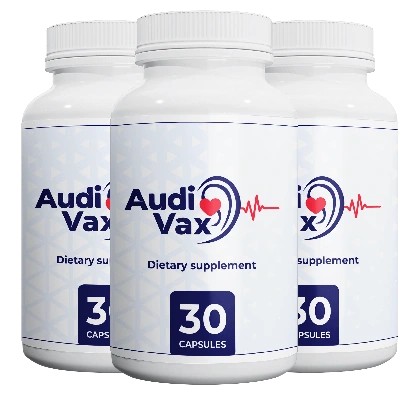
AudiVax bundles rhodiola with calming botanicals and hawthorn in one daily capsule. Start with the three-bottle set, or step up to six for the best per-bottle price — each backed by a 60-day guarantee.
See AudiVax packages & pricing →AudiVax is a dietary supplement, not a treatment for any medical condition, including hearing loss or tinnitus. These statements have not been evaluated by the Food and Drug Administration. This product is not intended to diagnose, treat, cure or prevent any disease. Always consult a qualified healthcare professional about your individual needs.
References & further reading
- National Center for Complementary and Integrative Health (NCCIH). Rhodiola. nccih.nih.gov/health/rhodiola
- Examine.com. Rhodiola rosea. examine.com/supplements/rhodiola-rosea
- Ishaque S, et al. Rhodiola rosea for physical and mental fatigue: a systematic review. BMC Complementary and Alternative Medicine (PubMed Central). ncbi.nlm.nih.gov/pmc/articles/PMC3541197
- Ishaque S. et al. Rhodiola rosea for physical and mental fatigue: a systematic review. BMC Complementary and Alternative Medicine, 2012.
- National Center for Complementary and Integrative Health (NCCIH). Ashwagandha. nccih.nih.gov/health/ashwagandha
These references describe the ingredients in general terms and are not evidence that any product treats, cures or prevents any condition.
Keep reading: calming herbs for ear comfort · support healthy hearing naturally · the AudiVax blog · the AudiVax review.