How blood flow affects your hearing: AudiVax explains
Blood flow affects your hearing because the inner ear is fed by one of the finest and most active vessel networks in the body, and the hair cells that turn sound into signals have no oxygen reserve of their own — they depend on a steady supply carried in the blood. Support that circulation and you support the environment those cells work in; neglect it, and everyday listening can become one more thing your body is straining to keep up with. This is the circulation half of the story, and it is exactly the half a formula like AudiVax is built to support.
How circulation and hearing connect, in one place.
- The link
- The inner ear is richly supplied with tiny blood vessels, so healthy circulation helps maintain the oxygen and nutrient delivery its hair cells rely on.
- Why it is fragile
- Those vessels are microscopically fine with little back-up supply, which is part of why the ear is sensitive to circulation and to cardiovascular health.
- What the evidence shows
- Studies link cardiovascular risk factors — smoking, high blood pressure, diabetes — with more hearing difficulty. It is an association, not proof of cause.
- Where AudiVax fits
- Its circulatory herb hawthorn and adaptogens support the calm, well-circulated body your ears sit inside — a support to healthy habits, not a treatment.
We tend to picture hearing as a job the ears do alone, but the ear is deeply plugged into the rest of the body — and nowhere more than through its blood supply. This guide walks through the inner ear's circulation in plain language: what feeds it, why its hair cells are so dependent on steady flow, what the research does and does not say, and the everyday habits (plus the circulatory botanicals in AudiVax) that help support it.

How does blood flow affect your hearing?
Blood flow affects hearing by delivering the oxygen and nutrients that the inner ear's sound-sensing cells need every second they work. The cochlea — the snail-shaped organ of hearing — is metabolically busy out of all proportion to its size, and its cells cannot pause to rest or store fuel for later. When circulation is steady, they operate in a healthy, well-supplied environment; when circulation is compromised over years by smoking, unmanaged blood pressure or diabetes, the whole neighbourhood the cells live in comes under more strain. That is the core idea, and everything below expands on it.
Two things keep this honest. Healthy blood flow is a supporting condition for hearing, not a switch that turns it on or off — noise and age remain the largest drivers of hearing change — and no supplement, AudiVax included, can restore hearing that is already gone. What good circulation habits can do is help keep the everyday environment favourable.
What is the inner ear's blood supply?
The inner ear's blood supply is a fine, largely single-source network fed by the labyrinthine artery, which threads into the cochlea and divides into vessels almost too small to see. Because there is little redundancy — few alternative routes if flow is interrupted — the cochlea is considered one of the more circulation-sensitive tissues in the head. Understanding that anatomy makes the link between circulation and hearing feel a lot less abstract.
Which artery feeds the cochlea?
The cochlea is supplied mainly by the labyrinthine (internal auditory) artery, usually a branch off the circulation at the base of the brain. It carries essentially all the blood the inner ear receives, then fans out into a spiral of tiny vessels running alongside the coiled cochlea. Unlike muscle or skin, the inner ear has little in the way of a back-up supply, so the health of this single delivery line matters a great deal.
What is the stria vascularis?
Tucked into the wall of the cochlea is a remarkable, vessel-packed strip called the stria vascularis. Its job is to power the inner ear: it maintains the special fluid balance and the electrical charge (the endocochlear potential) that the hair cells need in order to fire. It is one of the most densely vascular tissues in the body precisely because that work is so energy-hungry. When people talk about circulation mattering for hearing, the stria vascularis is a big part of what they mean.

Why do hair cells depend on blood flow?
Hair cells depend on blood flow because they are among the most delicate and least replaceable cells you own: mammals do not regrow the sensory hair cells of the cochlea, so every one has to be kept healthy for a lifetime. These cells convert the mechanical energy of sound into nerve signals thousands of times a second, work that burns energy continuously and demands a constant supply of oxygen and glucose from the blood. There is no reserve tank; if delivery falters, the cells feel it quickly.
This is why prevention runs through everything in ear wellness. You cannot re-grow a hair cell, but you can protect the ones you have — by shielding them from loud noise, and by keeping the circulation that feeds them healthy. Circulation is the part people most often overlook, and the one this article is really about.
Does circulation and hearing really connect — what does the evidence say?
The connection between circulation and hearing is best described as a well-documented association rather than a settled case of cause and effect. Large reviews have noted that people with cardiovascular risk factors or established heart and vessel disease tend to have poorer hearing on average, and that the inner ear may act as an early “window” onto the health of small blood vessels throughout the body. That is a meaningful signal — but association is not proof, and the honest reading keeps both facts in view. Circulation is only one of several explanations for a ring or a hiss, and the full list is in what causes ringing in the ears.
| Circulatory factor | What research broadly associates it with | Everyday takeaway |
|---|---|---|
| Smoking | Higher likelihood of hearing difficulty in population studies | Not smoking is one of the most circulation-friendly choices there is. |
| High blood pressure | Associated with poorer hearing thresholds in some cohorts | Managing blood pressure supports vessels everywhere, ears included. |
| Diabetes | Consistently linked with higher rates of hearing loss | Steady blood-sugar management is part of ear-friendly living. |
| Physical inactivity | Poorer cardiovascular health, an indirect risk marker | Regular movement supports the flow the whole body shares. |
| Good cardiovascular fitness | Associated with better hearing in some studies of active adults | What is good for your heart is generally good for your ears. |
Read the table as sensible probabilities, not guarantees. None of these factors acts alone, and plenty of people with excellent circulation still experience noise- or age-related hearing change. The practical message is that the levers protecting your heart are, conveniently, the same ones that support the environment your ears depend on.
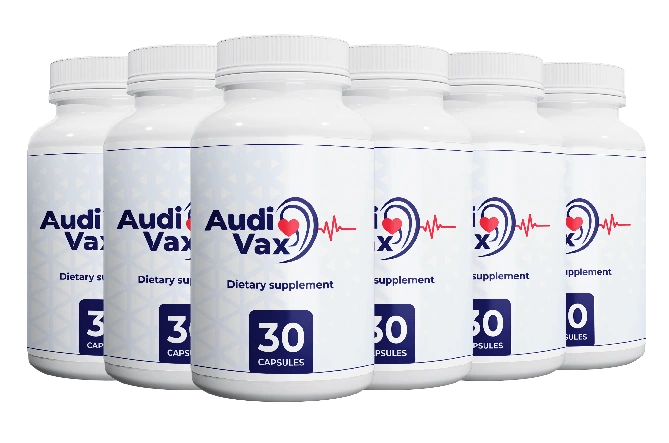
Support the circulation half every day
AudiVax is a once-daily capsule pairing circulatory hawthorn and the adaptogens rhodiola and ashwagandha with calming botanicals. See the exact dose in AudiVax — the six-bottle bundle is the best value at $49 per bottle, with free U.S. shipping and a 60-day guarantee.
Order AudiVax — from $49/bottleWhat everyday habits support ear circulation?
The habits that support ear circulation are the same ones a cardiologist would recognise, because the inner ear draws on the body's general blood supply. The point is not perfection but nudging several ordinary things in the right direction so the flow that feeds the cochlea stays steady. For a deeper walk-through, see our guide on how to improve ear circulation naturally.
1. Move most days
Regular aerobic activity — brisk walking, cycling, swimming, gardening — supports the cardiovascular system that feeds every tissue, ears included. You do not need a gym; consistency beats intensity, and even a daily walk counts as circulation-friendly work you can actually keep up.
2. Don't smoke, and keep alcohol moderate
Tobacco works directly against healthy circulation and is one of the clearest risk markers for hearing difficulty in the research. Keeping alcohol moderate supports steadier blood pressure and sleep, both of which sit upstream of good flow.
3. Mind blood pressure and blood sugar
Because high blood pressure and diabetes are the factors most consistently linked with poorer hearing, keeping both in a healthy range — through diet, movement and, where needed, your doctor's guidance — is quietly one of the most ear-protective things you can do over a lifetime.

4. Manage stress and protect your sleep
Chronic stress and short nights keep the nervous system on higher alert and work against steady circulation over time. Seven to nine hours of regular sleep, plus simple decompression — a walk, slow breathing, time outdoors — supports a calmer, better-circulated baseline. This is also where the calming half of the AudiVax blend earns its place.
See the exact dose in AudiVax →
Where does AudiVax fit — the circulation half of the formula?
AudiVax fits into this picture as a daily support for the calm, well-circulated body your ears sit inside — not as a treatment for hearing loss or tinnitus, which no supplement can claim to be. Its formula deliberately covers two halves of everyday ear wellness: a calming side (valerian, passionflower, chamomile, skullcap) and a circulatory side led by hawthorn and supported by adaptogens. This article is about that second half.

| AudiVax ingredient | Type | Traditional / general role |
|---|---|---|
| Hawthorn | Circulatory herb | A long traditional history of being used to support healthy circulation. |
| Rhodiola | Adaptogen | Used to help the body meet everyday stress and support steady energy. |
| Ashwagandha | Adaptogen | Valued for supporting a calm response to daily stress. |
| Valerian & passionflower | Calming nervines | Traditionally taken to encourage relaxation and restful downtime. |
Hawthorn is the ingredient that ties this formula to the topic of blood flow: it has been used for centuries in traditional practice to support healthy circulation, which is why it anchors the circulatory side of AudiVax. To go deeper on the single herb, read hawthorn for circulation and ear health, or see the full ingredients section and our overall AudiVax review. As always, these describe traditional and general use — they are a support to healthy habits, not evidence that any product treats a condition.
When should you see a professional?
Circulation habits and a daily supplement support everyday ear wellness; they are not a replacement for care. See an audiologist or doctor promptly if you notice sudden or one-sided hearing change, ear pain, persistent ringing (tinnitus), dizziness or drainage — and, because circulation and hearing are linked, treat a new hearing change as one more reason to check in on your cardiovascular health too. A hearing test is quick, painless and the best way to know where you stand. AudiVax is not a treatment for any of these; it is a daily wellness habit.
Frequently asked questions
How does blood flow affect your hearing?
The inner ear is one of the most blood-hungry tissues in the body for its size, and its hair cells have no oxygen store of their own. They depend on a continuous supply carried by a fine network of vessels, so anything that supports healthy, steady circulation supports the environment those cells work in. AudiVax cannot restore lost hearing, but healthy blood flow is a core part of everyday ear wellness.
What is the inner ear's blood supply?
The inner ear is fed mainly by the labyrinthine (internal auditory) artery, which branches into tiny vessels feeding the cochlea. A specialised, vessel-rich strip called the stria vascularis maintains the fluid and electrical balance the hair cells need. These vessels are extremely fine and have little back-up supply, which is part of why the inner ear is sensitive to circulation.
Can poor circulation cause hearing problems?
Research links cardiovascular risk factors such as smoking, high blood pressure and diabetes with a higher likelihood of hearing difficulty, and reviews describe an association between cardiovascular and hearing health. This is an association, not proof that circulation alone causes hearing loss, and many other factors including noise and age are involved.
Do hair cells depend on blood flow?
Yes. The cochlea's hair cells are metabolically active and cannot regrow once lost, so they rely on a steady delivery of oxygen and nutrients through the blood. When that supply is well maintained, the cells work in a healthier environment; this is one reason prevention and everyday circulation habits matter so much.
Does hawthorn improve hearing?
No herb has been shown to improve hearing, and AudiVax makes no such claim. Hawthorn has a long traditional history of being used to support healthy circulation, which is why it appears in the AudiVax formula alongside calming botanicals — as a support to healthy habits, not a treatment for any condition.
How does AudiVax support circulation and hearing?
AudiVax pairs the circulatory herb hawthorn and adaptogens such as rhodiola and ashwagandha with calming botanicals in one daily capsule. It is designed to support the calm, well-circulated body your ears sit inside as part of a healthy routine, and it is not a substitute for hearing protection or medical care.
Check today's AudiVax pricing →
AudiVax is a dietary supplement, not a treatment for any medical condition, including hearing loss or tinnitus. These statements have not been evaluated by the Food and Drug Administration. This product is not intended to diagnose, treat, cure or prevent any disease. Always consult a qualified healthcare professional about your individual needs.
References & further reading
- National Institute on Deafness and Other Communication Disorders (NIDCD). Hearing, Ear Infections, and Deafness. nidcd.nih.gov/health/hearing-ear-infections-deafness
- Curhan S.G. et al. Body mass index, waist circumference, physical activity, and risk of hearing loss in women. The American Journal of Medicine, 2013.
- Shi X. Physiopathology of the cochlear microcirculation. Hearing Research, 2011.
- Mayo Clinic. Hearing loss — symptoms and causes. mayoclinic.org/diseases-conditions/hearing-loss
- Examine.com. Hawthorn (Crataegus). examine.com/supplements/hawthorn
- National Center for Complementary and Integrative Health (NCCIH). Rhodiola. nccih.nih.gov/health/rhodiola
These references describe the anatomy, ingredients and habits in general terms and do not constitute evidence that any product treats, cures or prevents any condition.
Keep reading: how to improve ear circulation naturally · hawthorn for circulation and ear health · back to the AudiVax blog · homepage.