Ashwagandha for hearing and stress: the AudiVax adaptogen guide
Ashwagandha (Withania somnifera) is an adaptogenic herb, long used in Ayurvedic tradition, that is valued for supporting a calm, steady response to everyday stress while helping the body feel less depleted — and that calm-and-vitality role is exactly why it sits inside AudiVax. It is not a stimulant, not a sedative, and not a treatment for hearing loss or tinnitus; it is a support to a rested, lower-stress body, which is the environment in which everyday listening tends to feel most comfortable.
What ashwagandha does — and does not do — for hearing and stress.
- What it is
- An adaptogen: an herb studied for helping the body meet everyday stress without over-stimulating it.
- The hearing link
- Indirect. It supports calm and restedness; it does not act on the ear and cannot restore hearing.
- What the research shows
- Human trials suggest standardized extracts may lower self-reported stress and cortisol over 6–12 weeks; evidence is promising but not definitive.
- Where it fits in AudiVax
- One calming-and-vitality botanical within a once-daily blend, alongside valerian, hawthorn and rhodiola.
- Honest caveat
- It is a slow-building wellness habit, not a fast fix, and it is not for everyone — see the safety section below.
Of all the botanicals in a modern calm-and-hearing formula, ashwagandha has the deepest bench of human research behind it — precisely why it earns a place in AudiVax. This guide explains what an adaptogen is, what the evidence does and does not support, and how ashwagandha connects to the stress side of ear wellness.
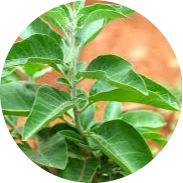
What is ashwagandha, and what does “adaptogen” mean?
An adaptogen is a plant compound thought to help the body maintain balance under everyday stress — nudging an over-revved system down and a depleted one back up, rather than pushing in a single direction. Ashwagandha is the most-studied member of this small family, used in Ayurvedic practice for well over two thousand years; its name translates loosely as “smell of the horse,” a nod to its reputation for steady, horse-like vigour.
The part used is the root, usually taken as a standardized extract concentrated for compounds called withanolides, believed to drive much of its activity. Crucially, ashwagandha is neither a stimulant nor a sedative in the pharmaceutical sense: people describe its effect as feeling less frazzled rather than wired or drowsy — calm without a crash, energy without a jolt.
How is it different from caffeine or a sleep aid?
Caffeine forces alertness and then fades; a sedative pushes you down. Ashwagandha does neither. Instead of overriding your state, it supports your body’s own regulation of it, which is why the same herb is discussed both for daytime steadiness and for easier wind-downs at night. The trade-off is speed: you feel caffeine in minutes, whereas ashwagandha builds over weeks.
How does ashwagandha relate to hearing and stress?
Ashwagandha’s connection to hearing is indirect: it works on the stress side, not on the ear itself. The auditory system is wired closely to the parts of the nervous system that handle stress and arousal, and many people notice that everyday ear comfort tracks with how rested they feel. When chronic stress keeps the nervous system on higher alert, listening can feel more effortful; when the body is calmer, it often feels easier.
This is where an adaptogen fits. By supporting a calmer response to daily pressure, ashwagandha helps maintain the low-stress, well-rested backdrop that everyday listening prefers. To be clear about the limits: ashwagandha does not reach the inner ear, cannot repair hair cells, and is not a treatment for hearing loss or tinnitus. Its role is entirely about the state of the body around your ears — the same reason sleep and stress management appear in every sensible ear-wellness routine.

What does the research on ashwagandha actually show?
The honest summary is that ashwagandha has more human evidence behind it than most botanicals, but that evidence is promising rather than settled. Several randomized, placebo-controlled trials of standardized root extracts have reported reductions in self-reported stress and anxiety, and some measured lower morning cortisol — a key stress hormone — after daily use. Studies of sleep and energy were generally favourable but more modest.
The caveats matter: many trials are small, several were funded by extract manufacturers, and doses vary, which makes the evidence uneven. None of it shows any effect on hearing, and it should never be read as proof that a supplement treats a condition. What it does support is a careful case that standardized ashwagandha can help some people feel calmer over a couple of months of consistent use.
| Area studied | What human research suggests | Strength of evidence |
|---|---|---|
| Everyday stress & anxiety | Lower self-reported stress vs. placebo in several trials | Moderate |
| Cortisol (stress hormone) | Reduced morning cortisol in some studies | Moderate |
| Sleep quality | Better perceived sleep and quicker wind-down | Preliminary |
| Energy & sense of vitality | Less fatigue and steadier daytime energy | Preliminary |
| Hearing or tinnitus | No evidence of any direct effect | None — not a hearing treatment |
For a wider view of how calming botanicals fit around the ears, our companion guide to calming herbs for ear comfort puts ashwagandha in context alongside valerian, passionflower and skullcap.
Why is ashwagandha in AudiVax?
Ashwagandha is in AudiVax because it is the blend’s calm-and-vitality anchor: the ingredient most likely to help the formula deliver the steady, rested feeling the routine is built around. AudiVax pairs it with the classic calming herbs valerian, passionflower, chamomile and skullcap, the circulatory herb hawthorn, and a second adaptogen, rhodiola, so that ashwagandha is not carrying the load alone but reinforcing a shared theme of everyday steadiness.
Rather than a standalone mega-dose of one extract, AudiVax uses ashwagandha in a once-daily capsule designed for consistency — the way adaptogens are meant to be taken. See how it sits beside the other botanicals in the full ingredients section, or read our overview of how to support healthy hearing naturally.
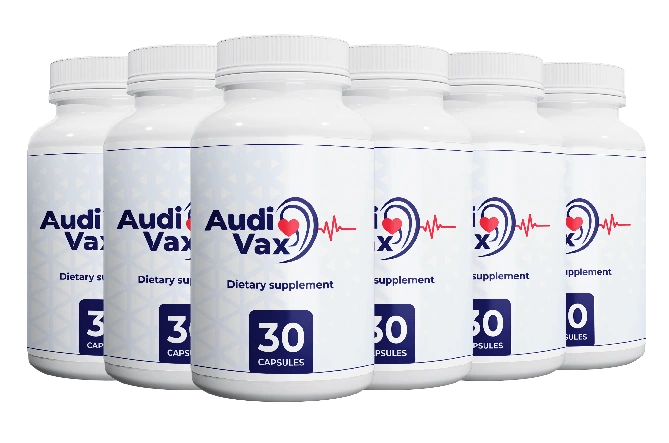
See the exact dose in AudiVax
AudiVax combines ashwagandha and rhodiola with calming valerian and circulatory hawthorn in one evening capsule. The six-bottle bundle is the best value at $49 per bottle, with free U.S. shipping and a 60-day guarantee.
Check today’s AudiVax pricing — from $49/bottleHow much ashwagandha should you take, and when?
A typical research dose of standardized ashwagandha root extract is 250–600 mg per day, and the trials that reported benefits generally ran for six to twelve weeks. Because AudiVax delivers ashwagandha within a multi-botanical blend, its per-capsule amount is formulated to work with the other ingredients rather than to match a high-dose, single-herb study — the precise figure is on the AudiVax supplement facts panel.
Timing is flexible: some prefer ashwagandha in the evening, where its calming reputation pairs with a wind-down; others take it in the morning for steadiness. Either way, the key with any adaptogen is consistency — taken at the same time daily, it has the best chance to build its gradual support.
| Question | Practical answer |
|---|---|
| Common research dose | ~250–600 mg/day standardized root extract |
| How AudiVax delivers it | One evening capsule within a calming-and-circulatory blend |
| Best time to take | Evening for wind-down, or morning for steadiness — same time daily |
| Time to notice | Typically 6–12 weeks of consistent use; results vary |
| With or without food | Either; some prefer with a meal to sit easy |

Is ashwagandha safe, and who should avoid it?
For most healthy adults, standardized ashwagandha is generally well tolerated in studied doses, with mild digestive upset or drowsiness the most commonly reported effects. That said, it is genuinely not for everyone, and a few groups should be cautious rather than casual about it.
Talk to a doctor before using ashwagandha if you are pregnant or breastfeeding (it is traditionally avoided in pregnancy), if you have a thyroid or autoimmune condition, or if you take sedatives, thyroid medication or immune-related drugs, since it may interact. It is not intended for children. The sensible rule is to check with a qualified healthcare professional before starting, and to stop and seek advice if anything feels off.
How does ashwagandha compare to other adaptogens?
Ashwagandha and rhodiola are the two adaptogens most people meet first, and they lean in different directions: ashwagandha is the calmer, grounding one, often favoured for stress and evening steadiness, while rhodiola is discussed for daytime resilience. That complementary pairing is exactly why AudiVax includes both — ashwagandha to settle, rhodiola to steady — and neither is a stimulant, works instantly, or treats any condition.
See the exact dose in AudiVax →
Frequently asked questions
What is ashwagandha, and is it a stimulant?
Ashwagandha (Withania somnifera) is an adaptogenic herb used for centuries in Ayurvedic tradition. It is not a stimulant like caffeine; it is valued for supporting a calm, steady response to everyday stress rather than for a jolt of energy. Any sense of vitality tends to come from feeling less depleted, not from stimulation.
Can ashwagandha improve hearing or treat tinnitus?
No. Ashwagandha is not a treatment for hearing loss, tinnitus or any medical condition, and AudiVax makes no such claim. It is included as a calming adaptogen to support the rested, lower-stress state that many people find makes everyday listening feel more comfortable.
How does ashwagandha help with stress?
Human studies suggest standardized ashwagandha extracts may support a calmer response to everyday stress and are associated with lower self-reported stress and, in some trials, lower cortisol. The effect is supportive and gradual, and results vary from person to person.
How much ashwagandha is in AudiVax?
AudiVax includes ashwagandha as one botanical within a once-daily calming-and-circulatory blend, so its dose sits alongside valerian, hawthorn, rhodiola and others rather than as a standalone high-dose extract. The exact amount per capsule is listed on the AudiVax supplement facts panel.
How long does ashwagandha take to work?
Ashwagandha is not a fast-acting compound. Most human trials that reported benefits ran for roughly six to twelve weeks of daily use, so it is best thought of as a build-over-time habit rather than something you feel within an hour. Individual timelines vary.
Who should avoid ashwagandha?
People who are pregnant or breastfeeding, those with thyroid or autoimmune conditions, and anyone taking sedatives, thyroid or immune-related medication should talk to a doctor before using ashwagandha. It is not intended for children. When in doubt, check with a qualified healthcare professional first.
Try AudiVax risk-free for 60 days →
AudiVax is a dietary supplement, not a treatment for any medical condition, including hearing loss or tinnitus. These statements have not been evaluated by the Food and Drug Administration. This product is not intended to diagnose, treat, cure or prevent any disease. Always consult a qualified healthcare professional about your individual needs.
References & further reading
- National Center for Complementary and Integrative Health (NCCIH). Ashwagandha. nccih.nih.gov/health/ashwagandha
- Examine.com. Ashwagandha (Withania somnifera): evidence-based analysis. examine.com/supplements/ashwagandha
- PubMed / U.S. National Library of Medicine. Ashwagandha, stress and cortisol — randomized trials. pubmed.ncbi.nlm.nih.gov/?term=ashwagandha+stress+cortisol
- National Center for Biotechnology Information (NCBI). Withania somnifera: adaptogenic and anti-stress research. ncbi.nlm.nih.gov/pmc/?term=withania+somnifera+stress
- National Institute on Deafness and Other Communication Disorders (NIDCD). Noise-Induced Hearing Loss. nidcd.nih.gov/health/noise-induced-hearing-loss
These references describe the ingredient and habits in general terms and do not constitute evidence that any product treats, cures or prevents any condition.
Keep reading: calming herbs for ear comfort · how to support healthy hearing naturally · the best foods for ear health · the AudiVax review · back to the blog.